
Soli, one of the most important city kingdoms founded in Cyprus, has a history reaching back to around 700 BC.
Research indicates that the city managed to retain its important position for a long period thanks to its strategic location, fertile land, harbour and the nearby copper mines. Soli enjoyed its most brilliant period under Roman rule. The Arab raids of the 7th century brought about the city’s end.
Excavations have yielded gold and silver jewellery from the Hellenistic period, a marble statue of Aphrodite made in the 1st century BC, and a 2nd-century BC relief depicting the battle with the Amazons. Remains of a Hellenistic colonnaded street leading to the agora and of a monumental marble fountain in the agora have also been uncovered. The Soli Basilica is known to have been built in the second half of the 4th century and to be among the first churches constructed in Cyprus. Although it was enlarged in the 5th and 6th centuries, it was destroyed during the Arab raids of the 7th century. The church has a three-doored entrance and a courtyard surrounded on four sides by columns, with a fountain. Beyond the courtyard, another three-doored entrance leads into the church. Inside there are twelve columns arranged in two rows. Much of the floor mosaic, mostly of geometric and animal designs, has survived to the present day.
The symbol of the city is the swan mosaic of matchless beauty in the Basilica.
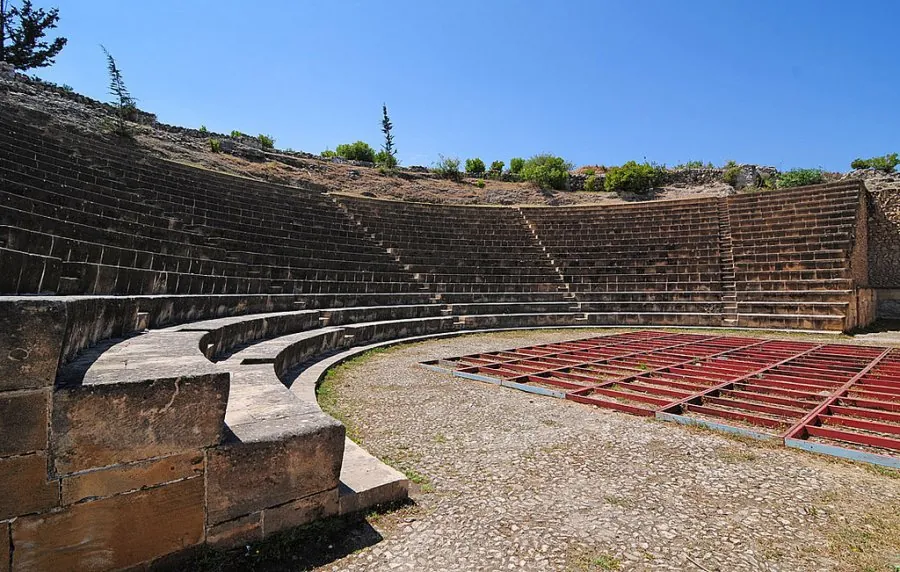
The Soli Roman Theatre was built between the 2nd and 3rd centuries AD on the seaward slope of a hill, on the site of an earlier Greek theatre. The semicircular seating area for the audience was cut into the rock of the hill. This section is separated from the orchestra (chorus area) at the centre by a low limestone wall, with access to both provided by passages at the sides. The theatre, with an actual capacity of 4,000, has a two-storey stage building decorated with marble and statues. Traces of a temple dedicated to Aphrodite have been found on a hill to the west of the theatre.
Excavations carried out in 2005 brought to light a wealth of gold finds and archaeological artefacts.
Soli, in the Lefke region, is one of the ancient cities that can be visited in Northern Cyprus. Situated on fertile land, Soli held an important position on the island thanks to the copper deposits in the area and its harbour. Today this settlement, protected and open to visitors, is one of history’s heritage sites well worth preserving.
The origins of Soli can be traced back to around 700 BC, to a list of the cities from which the Assyrians collected tribute; in that list the city appears as Si-il-lu. According to early written sources, in 580 BC Philokypros, one of the kings on the island, moved his capital from the city of Aepia to Si-il-lu on the advice of his teacher, the Athenian philosopher Solon, and named it after him. In 498 BC Soli, together with the other kingdoms on the island, rose against the Persians who ruled Cyprus, and was defeated. Soli enjoyed its most brilliant years under Roman rule. By the 4th century AD, however, the harbour had silted up so much that ships could no longer enter and the copper mines had closed. The raids of Arab pirates in the 7th century brought about the city’s end. Research has shown that, as at Vouni, there was a royal palace on the acropolis covering the hill against which the theatre was set. Excavations have yielded gold and silver jewellery from the Hellenistic period, a marble statue of Aphrodite made in the 1st century BC (Cyprus Museum – southern Cyprus) and a 2nd-century BC relief depicting the battle with the Amazons. It has been suggested that the sarcophagus known as the Fugger Sarcophagus in the Vienna Museum of History may also have come from the Soli acropolis. Excavations have likewise uncovered the remains of a Hellenistic colonnaded street leading to the agora and of a monumental marble fountain in the agora. Freshwater springs, fertile land and a sheltered harbour, together with copper deposits and an abundance of timber for working the copper, suggest that Soli may not have been the first settlement founded here — and indeed archaeological excavations have uncovered traces of a settlement dated to the 11th century BC.
THE SOLI BASILICA
The Soli Basilica is thought to have been built in the second half of the 4th century. It is among the first churches constructed in Cyprus and has distinctive features. The 200-metre-long basilica began with a three-doored entrance and an entrance hall, followed by a courtyard surrounded on all four sides by columns and containing a fountain. Beyond this came another three-doored entrance and a narthex, after which one entered the church proper. Inside, twelve giant stone columns in two rows divided the nave into three; the bases of these columns are still in place today. At the end of the nave was a triple apse, the central seating of which belonged to the bishops and priests. The floor of the church was entirely covered with tessera mosaic (small square-cut stones), much of which has survived. Originally all geometric in design, the mosaics were in time joined by animal figures and later by opus sectile (made from cut pieces of stone) mosaics. Among the animal figures, the goose-like swan surrounded by foliage and four small dolphins stands out. The mosaic in front of the apse bears the Greek inscription “O Christ, protect those who dedicated this mosaic.” In Christian tradition Soli is held to be the place where Saint Mark baptised Saint Auxibius. According to this, Auxibius, a Christian Roman who took refuge in Soli in the 1st century, later became the first bishop of the church of Soli.
THE SOLI THEATRE
The Roman theatre at Soli was built on the seaward slope of a hill, on the site of a Greek theatre that once stood there. It dates from the end of the 2nd and the beginning of the 3rd century AD. The semicircular section containing the audience seating was partly cut into the rock of the hill. It was separated from the central orchestra (chorus area) by a low wall of limestone blocks. Access to the orchestra and the seating was by passages on either side, in front of the stage building. Those stones and marbles of the seating that remained intact were used in the 19th century in the construction of the quay at Port Said. Originally seating 4,000, this section has now been restored to half its height. The stage building was two storeys high, faced with marble and decorated with statues; what can be seen today is the platform on which the stage building was constructed. Traces of a temple dedicated to Isis and Aphrodite have been found on a hill to the west of the theatre.
The Soli Theatre also hosts the annual graduation ceremonies of the European University of Lefke and the concerts by well-known artists held each year as part of the university’s spring festival.